Skip to content

Essential Vitamin and Mineral Supplements

mm Dr. Elena Volkov 9 min read

Why Most Supplement Plans Fail

Key Takeaways

  • Take vitamin D with a meal containing fat for 32% greater absorption compared to fat-free meals.
  • Magnesium supports vitamin D metabolism; supplemental upper limit is 350 mg per day for adults.
  • Iron needs differ sharply: 8 mg for men and postmenopausal women, 18 mg for premenopausal women.
  • Fat-soluble vitamins (A, D, E, K) accumulate; total your supplement facts across all products to avoid overdosing.
  • Probiotics are strain-specific; pick products that clearly list genus, species, and strain with viable count through expiration.
  • Steady meal planning reduces nutritional randomness more effectively than adding extra supplements for energy.

Vitamin D: Dose, Timing, and Fat

Vitamin D behaves more like a hormone than a typical vitamin and is tightly tied to absorption and storage. For most adults ages 19–70, the recommended dietary allowance is 600 IU (15 mcg) per day; for adults over 70, it's 800 IU (20 mcg). The tolerable upper intake level for adults is 4,000 IU (100 mcg) per day from all sources.

Those numbers matter because vitamin D is fat-soluble: it doesn't wash out of the body quickly the way many water-soluble vitamins do. This is a guardrail meant to reduce the risk of adverse effects when dosing drifts upward over time.

If you're specifically searching for vitamin D supplements for absorption, the evidence points to something refreshingly practical: take vitamin D with a meal that contains fat. In a controlled feeding study in older adults, taking vitamin D3 with a fat-containing meal produced about 32% greater absorption compared with a fat-free meal.

That doesn't mean you need a high-fat diet; it means that a capsule swallowed with black coffee and no breakfast is a common way to get less benefit from the same dose. Many softgels already suspend vitamin D in oil, which may help, but the meal context still matters.

Food sources include fatty fish (like salmon) and fortified milk. Consistency with meals is a simple habit that can make the same dose far more effective without increasing intake.

The Quiet Cofactor: Magnesium

Essential for vitamin D metabolism, energy production, and sleep—but dosing matters

Magnesium: Form, Dose, and Tolerance

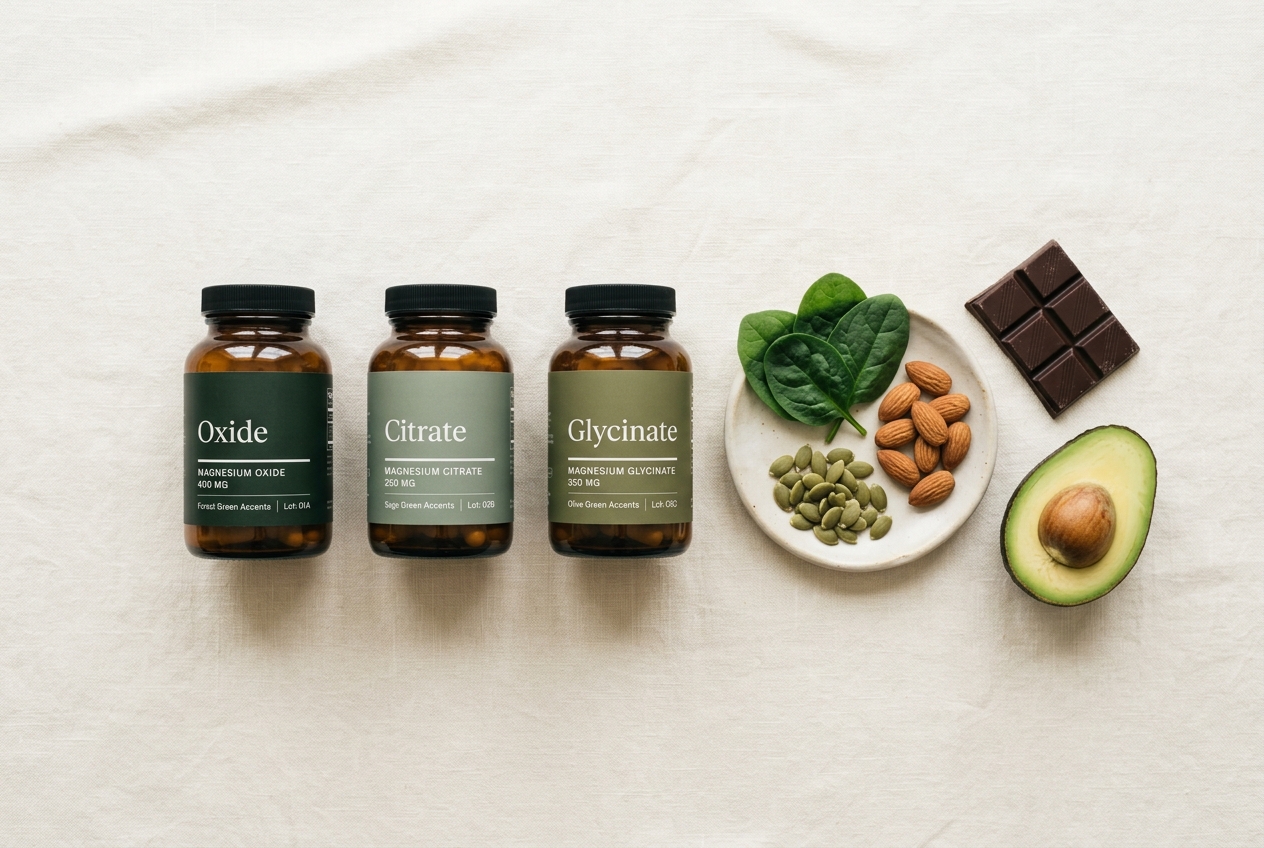
Magnesium is the quiet cofactor that often gets overlooked in vitamin D conversations. Your body uses magnesium in multiple steps of vitamin D metabolism, and magnesium itself is heavily involved in energy production, muscle and nerve function, and sleep physiology. A magnesium supplement can be a reasonable choice when diet quality is inconsistent or sweat losses are high, but the form and dose matter. The tolerable upper intake level for supplemental magnesium is 350 mg per day for adults. This limit applies to magnesium from supplements and certain medications, not magnesium naturally present in foods. The most common tell that you overshot is gastrointestinal distress, especially loose stools. When choosing magnesium, the label name usually signals how it's bound: magnesium oxide, citrate, glycinate, and others. Oxide tends to be less well absorbed and more likely to cause laxative effects; citrate can also loosen stools in some people; glycinate is often better tolerated for those who are sensitive, though individual response varies. If your goal is sleep and recovery rather than constipation relief, start low (for example, 100–200 mg elemental magnesium) and give it a full week before adjusting. More is not automatically better here—especially if you already take a multivitamin or an electrolyte powder that includes magnesium. Food sources include pumpkin seeds, beans, and leafy greens.

Magnesium oxide, citrate, and glycinate have different absorption profiles and tolerability. Choose based on your goal and sensitivity.

Eight Quality Filters for Supplements

  • Choose single-ingredient basics before blends
  • Look for third-party testing marks (USP or NSF)
  • Match the dose to a real gap, not a trend
  • Take fat-soluble vitamins with a meal containing fat
  • Avoid stacking duplicates across products
  • Favor clear labeling: forms, units, and serving size
  • Start low, then adjust after a week or two
  • Stop if you notice adverse effects and reassess

Energy Supplements: Expectations vs. Physiology

Most nutrients don't create energy out of thin air—they support the pathways that convert food into usable cellular energy

Iron, B12, and the Energy Myth

The supplements to boost energy category is where marketing gets loud and physiology gets quiet. Most nutrients don't create energy out of thin air; they support the pathways that convert food into usable cellular energy. That distinction is important because it makes expectations more realistic.

If your iron status is low, iron can improve fatigue; if it's normal, extra iron can be harmful. If vitamin B12 intake is insufficient (more likely with strictly plant-based patterns unless foods are fortified), correcting that gap can support normal red blood cell formation and neurological function.

For reference, the adult RDA for vitamin B12 is 2.4 mcg per day. Iron needs differ sharply by life stage: the adult RDA is 8 mg per day for men and for postmenopausal women, and 18 mg per day for premenopausal women.

Because iron has a relatively low margin between helpful and too much for many people, it's a nutrient to supplement cautiously and ideally with individualized guidance. Practical absorption rules help too: iron is generally absorbed better when taken with vitamin C–rich foods.

Iron is absorbed less well when taken alongside large amounts of calcium, tea or coffee, or high-fiber meals. Timing and food pairings matter as much as the dose itself.

Probiotics: Strain Matters

Daily Nutrient Reference: Food-First Anchors

Widely used targets and food sources for generally healthy adults

Quick Nutrient Guide

A quick nutrient reference can keep the essentials straight, especially when a bottle's serving size makes everything look small or huge. For generally healthy adults, these are widely used daily targets and food-first anchors. Vitamin D: 600 IU (15 mcg) for ages 19–70, 800 IU (20 mcg) if over 70; food sources include fatty fish like salmon and fortified milk. Magnesium: 310–320 mg for adult women and 400–420 mg for adult men; food sources include pumpkin seeds, beans, and leafy greens. Vitamin B12: 2.4 mcg; food sources include fish, dairy, eggs, and fortified foods. Iron: 8 mg for adult men and postmenopausal women, 18 mg for premenopausal women; food sources include red meat, lentils, and fortified cereals. Folate: 400 mcg DFE; food sources include legumes, asparagus, and leafy greens. These targets assume generally healthy adults without specific medical conditions; individualized guidance may adjust these numbers. The steady, science-checked approach is simple by design: pick the smallest number of supplements that address your most likely gaps, take them in a way that supports absorption, and let a consistent meal routine do the heavy lifting.

Nutrient Reference Table

Daily targets and food sources for generally healthy adults

Nutrient Recommended Daily Allowance Primary Food Sources
Vitamin D 600–800 IU Fatty fish, fortified milk
Magnesium 310–420 mg Pumpkin seeds, beans, leafy greens
Vitamin B12 2.4 mcg Fish, dairy, eggs, fortified foods
Iron 8–18 mg Red meat, lentils, fortified cereals
Folate 400 mcg DFE Legumes, asparagus, leafy greens

RDA values are for generally healthy adults. Iron needs: 8 mg for men and postmenopausal women, 18 mg for premenopausal women.

Meal Planning as Nutrient Strategy

One of the most practical ways to make supplements work better is to tighten the daily systems that control dietary consistency. That's where meal planning becomes more than an organization hack—it becomes a nutrient strategy.

If you've ever searched meal planning apps reviewed dietitian, you've likely noticed that the best ones do two things at once: they reduce decision fatigue and they reduce nutritional randomness. For people balancing training with demanding work schedules, that predictability can do more for energy and recovery than adding a fourth supplement.

Among the apps that are broadly used in the U.S. and built around real-life constraints, a few patterns stand out. Mealime is strong for beginners and busy households because it's simple, recipe-forward, and built around a weekly plan plus a shopping list.

eMeals tends to appeal to families who want structured weekly menus and grocery workflow support. Eat This Much is a more numbers-forward option for people who like targets and automation, including the ability to generate meal plans around personal nutrition goals.

Plan to Eat is ideal if you already have favorite recipes across sites and cookbooks and want a planning-and-shopping system rather than a curated recipe feed. Paprika Recipe Manager is best for serious recipe collectors who want to save, organize, and then drag recipes into a calendar.

The trade-off is clear: the more automation you want, the more time you'll spend configuring preferences; the more control you want, the more you'll curate your own recipe base. When the basics are in place, supplements become what they were always meant to be—small, targeted nudges, not the foundation.


mm

Dr. Elena Volkov

Nutrition Science Editor

A sleep scientist and circadian rhythm researcher who decodes the latest sleep science into actionable strategies for better rest and recovery. Dr. Volkov combines laboratory insights with real-world protocols to help readers optimize their sleep quality.

Get new articles by email

No spam — only new material on this topic.

You can unsubscribe at any time.