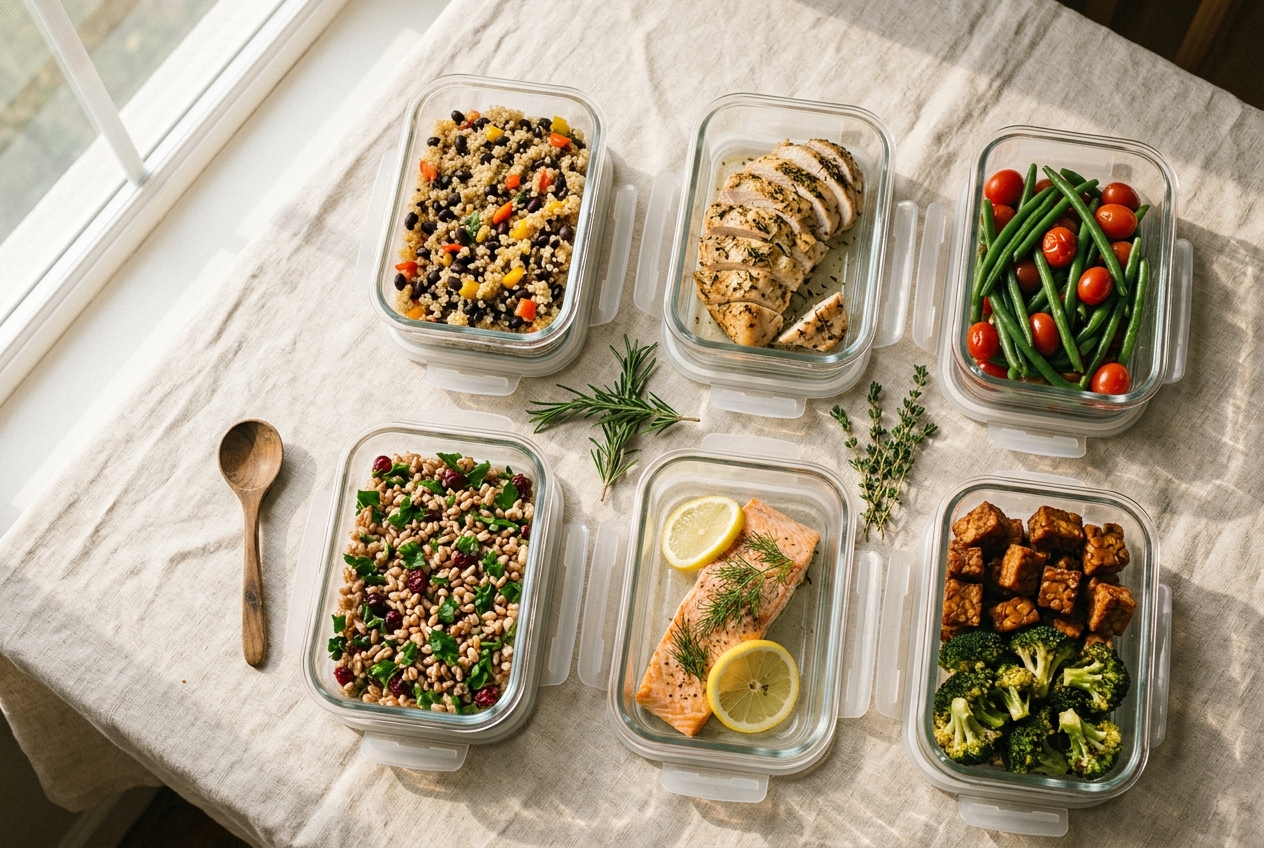
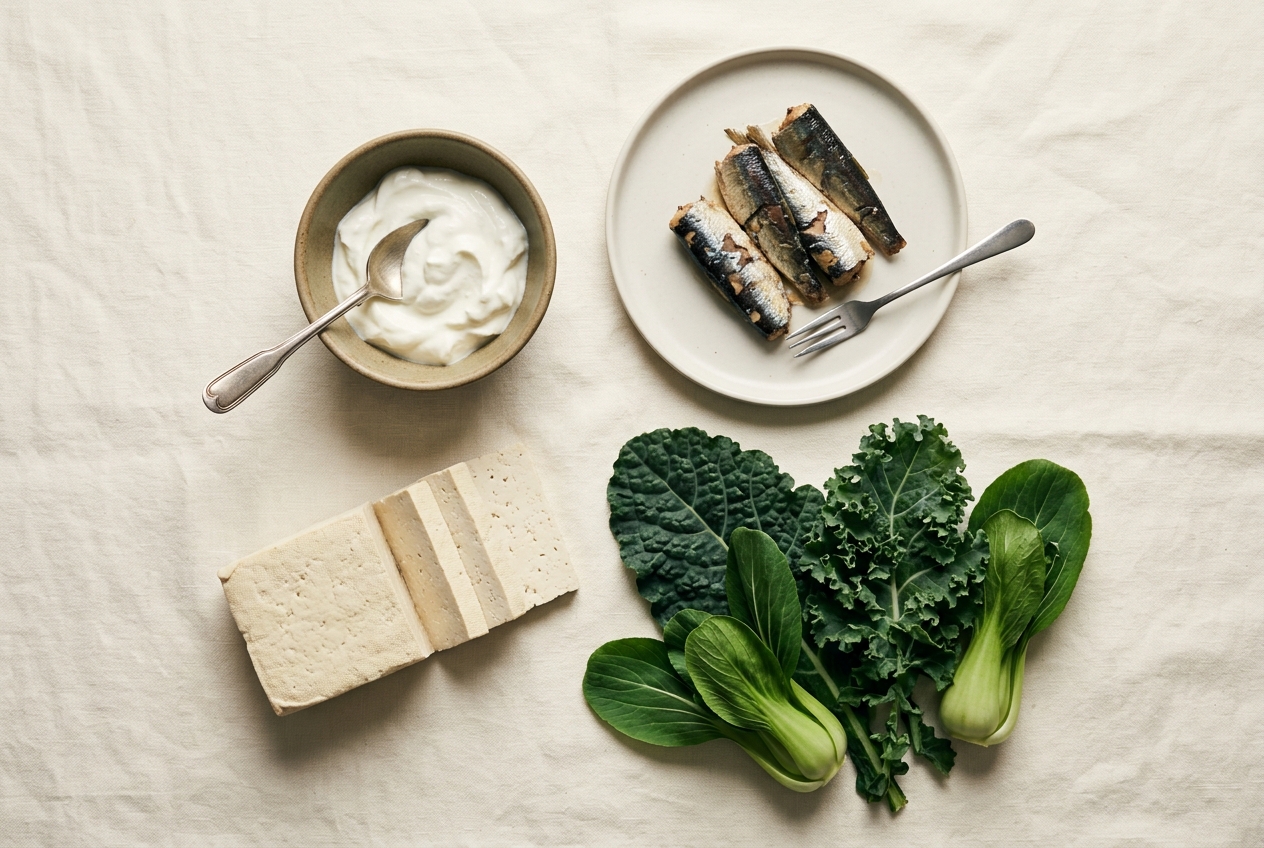
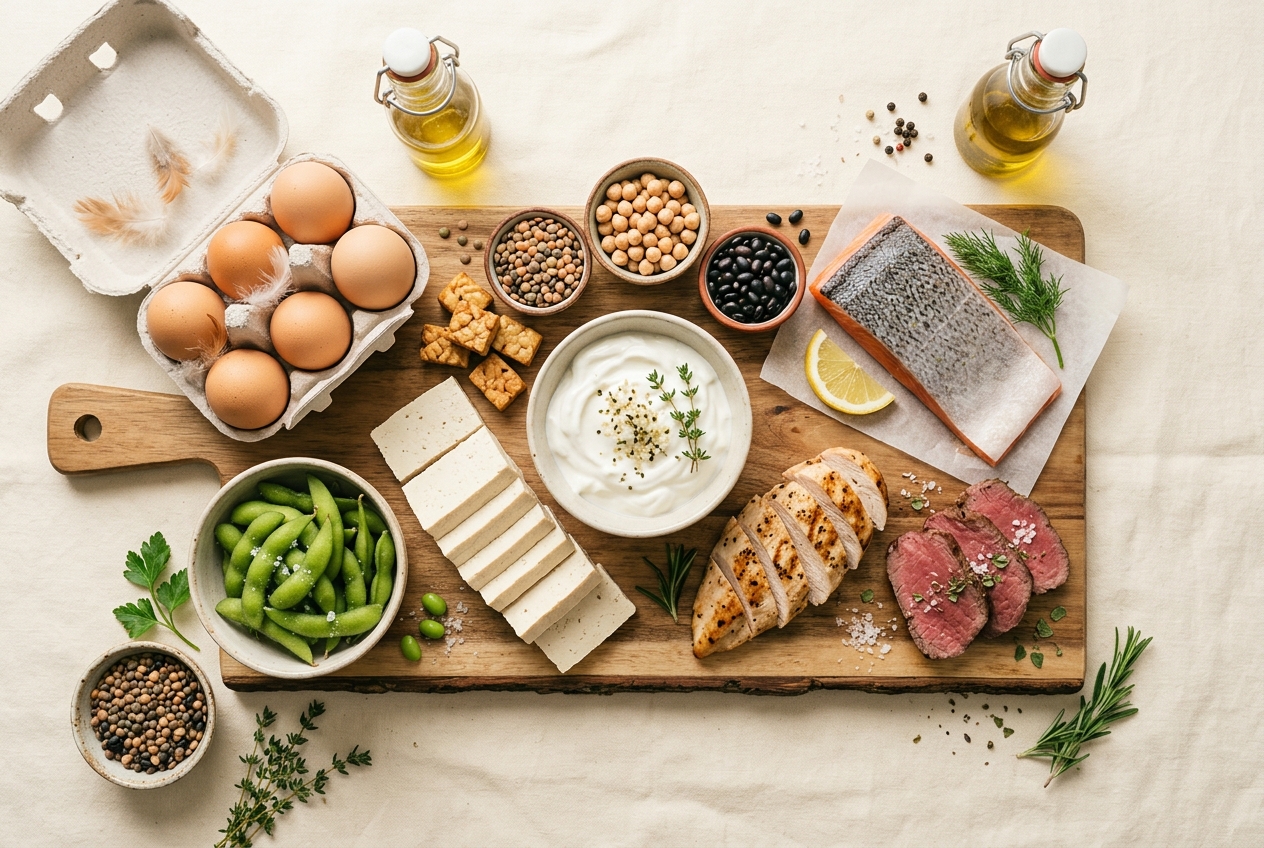
A flexible system becomes even more valuable when you're accommodating special diets, because just grab something often isn't an option. The solution is to keep the structure the same while swapping the component.
For vegetarian or vegan patterns, emphasize legumes like lentils, chickpeas, and black beans, plus tofu or tempeh, edamame, and nuts and seeds for fats. Plan one high-protein batch item—like lentil bolognese or a tofu sheet-pan bake—that can turn into multiple meals throughout the week.
For gluten-free eating, anchor your carbs with rice, quinoa, potatoes, corn tortillas, and certified gluten-free oats. Keep sauces simple to avoid hidden sources. For dairy-free needs, build creaminess with tahini, avocado, olive oil, and blended beans or cashews, and choose fortified nondairy milks or yogurts if you use them.
For lower-sodium eating, the biggest lever is reducing packaged sauces and seasoning heavily with acids and aromatics: lemon, vinegar, garlic, ginger, citrus zest, fresh herbs, and spice blends without added salt. These swaps preserve flavor while meeting your dietary needs.
Omega-3s are a common point of confusion because the conversation jumps quickly from food to pills. Food first is still the most evidence-aligned approach for most people. The American Heart Association recommends eating two servings of fish, particularly fatty fish, per week.
If you don't eat fish, plant sources like chia seeds, flaxseed, walnuts, and canola oil contribute alpha-linolenic acid. The National Academies lists Adequate Intake levels for ALA at 1.6 g per day for adult men and 1.1 g per day for adult women.
Where do omega-3 supplements fit? They can be useful when a person consistently cannot meet seafood intake or prefers not to, but they're not automatic. Quality, dose, and tolerance vary. A conservative, safety-minded approach is to stay within widely cited federal guidance that adults should not exceed 3 g per day of combined EPA and DHA, with no more than 2 g per day from supplements.
People who take medications that affect blood clotting, are preparing for surgery, are pregnant, or have complex health histories should discuss supplement use with a qualified healthcare professional—because natural is not the same as risk-free.