Skip to content

Nutrition Fundamentals Explained

mm Dr. Sarah Mitchell 10 min read

Why Nutrition Fundamentals Matter

Six Core Principles

  • Your overall pattern matters more than any single food.
  • Calories are only part of the story; protein, fiber, and food quality shape hunger and adherence.
  • Most people do better when meals contain protein, plants, a satisfying carb, and a healthy fat.
  • The nutrition facts panel is a tool, not a verdict.
  • Consistency beats intensity.
  • Weight management is a behavior-and-environment problem as much as a willpower problem.

Energy Balance and Appetite

Start with energy, because it underpins everything from training progress to how in control you feel around food. Energy balance is real—taking in more energy than you use leads to weight gain over time, and taking in less leads to loss—but it's not a simple math worksheet.

Appetite hormones, sleep, stress, food palatability, and the ease of snacking all influence intake. Two diets with the same calories can feel completely different: one may leave you hungry all day; the other might naturally keep you satisfied.

That difference is usually explained by protein, fiber, and the overall level of processing. Foods high in protein and fiber slow eating and digestion, improving fullness without relying on willpower alone.

The best evidence-based strategy for weight management is rarely extreme restriction; it's a modest energy deficit paired with high satiety per calorie. That usually looks like more protein, more fiber, and fewer liquid calories—without banning favorite foods.

A useful rule is to keep treat foods in the plan, but make them intentional: choose them, portion them, enjoy them, and move on. If your plan requires constant resistance, it's not a plan—it's a temporary performance.

Macronutrients Explained

Carbohydrates, fats, and protein are the body's main energy sources and structural materials

Protein: Satiety and Muscle Preservation

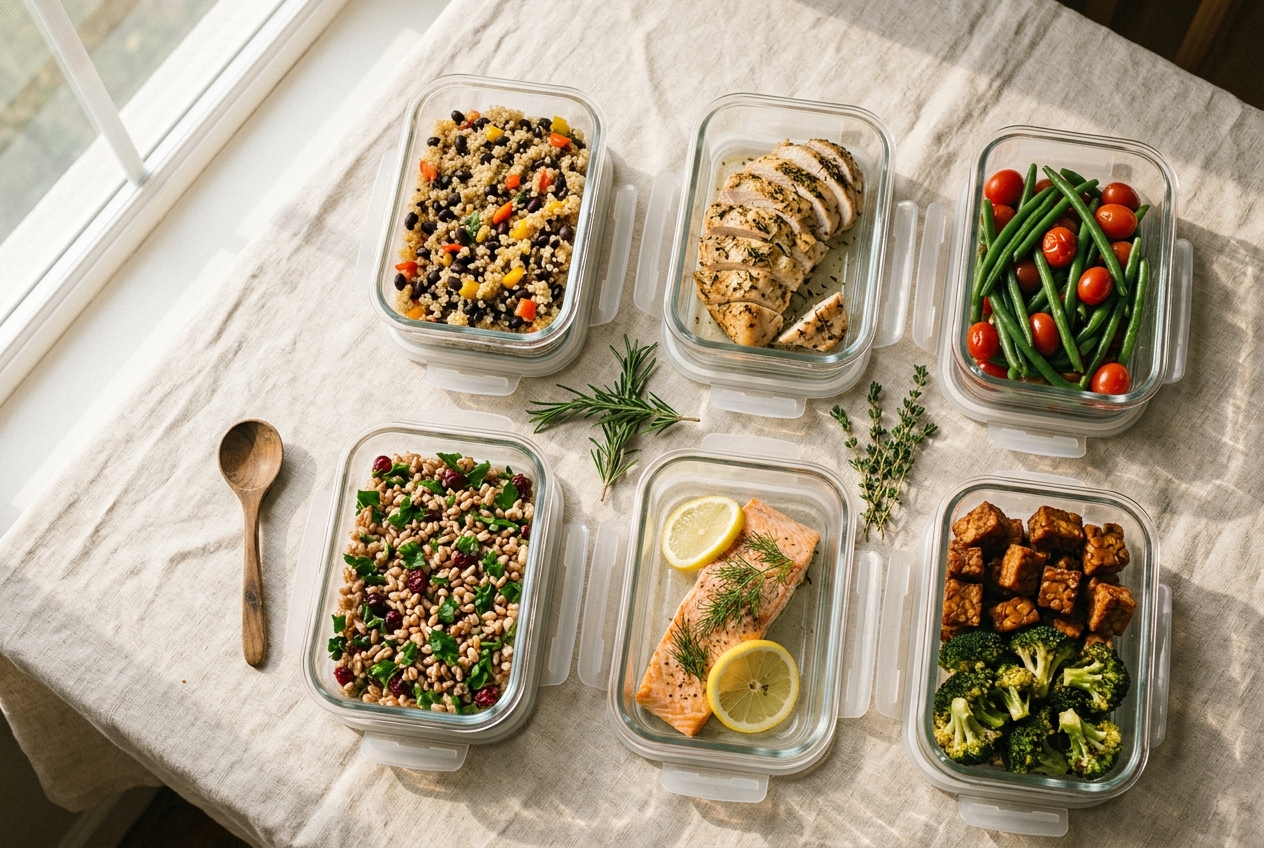
Protein is the macronutrient that most reliably supports satiety and helps preserve lean mass during fat loss. The baseline Recommended Dietary Allowance for adults is 0.8 grams of protein per kilogram of body weight per day, which is enough to prevent deficiency for most people—but not necessarily enough to optimize training outcomes or appetite for everyone. If you do regular resistance training, are in a calorie deficit, or are older, you may feel and function better with more than the minimum. Practical protein anchors include Greek yogurt, eggs, tofu, tempeh, edamame, beans and lentils paired with grains, fish, poultry, and lean meats. The Acceptable Macronutrient Distribution Range for protein is 10–35% of daily calories, a wide range that gives you flexibility to find what works best for your body and goals.

Greek yogurt, eggs, tofu, tempeh, edamame, beans, lentils, fish, poultry, and lean meats are practical protein anchors.

Carbohydrates: Fuel and Fiber

  • Carbohydrates are the body's most accessible fuel for higher-intensity activity.
  • What matters is the package: oats, potatoes, fruit, and beans land differently than refined snacks.
  • Fiber improves fullness, digestive regularity, and crowds in plants.
  • Adults ages 19–50 need 38 grams per day (men) or 25 grams per day (women).
  • The Daily Value for dietary fiber is 28 grams—useful as a quick benchmark.
  • Fiber is one of the most common gaps in modern diets.
  • Choose whole grains more often than refined grains.
  • Pair grains with beans and lentils to boost fiber and protein.

Dietary Fats and Micronutrients

Unsaturated fats support hormone production, vitamin absorption, and satisfaction

Fat-Smart Eating

Dietary fat supports hormone production, absorption of fat-soluble vitamins A, D, E, and K, and satisfaction. The type of fat matters for long-term cardiometabolic risk: unsaturated fats from olive oil, nuts, seeds, avocado, and many fish are generally the fats to emphasize, while saturated fat is the one most guidelines still suggest limiting.

The pattern that tends to work best for most people is not fat-free; it's fat-smart—enough fat to enjoy meals and stay satisfied, with most of it coming from unsaturated sources. Use added fats intentionally and measure oils sometimes to stay aware of portions.

Micronutrients—vitamins and minerals—don't provide calories, but they're essential for energy metabolism, red blood cell production, immune function, and recovery. The simplest way to cover micronutrients without turning eating into a spreadsheet is variety: different colors of produce, a rotation of protein sources, and at least some fortified foods when appropriate.

If your current eating pattern is heavy on refined grains and low on plants, you'll often see the same issues repeatedly—low fiber, low potassium, and low magnesium—long before any single superfood would make a meaningful difference.

Over-focusing on supplements can distract from the basics—protein at meals, vegetables most days, enough sleep—where the real leverage sits. Build your foundation with whole foods first, then consider supplements only for documented gaps.

Building Balanced Meals

Reducing Friction in Healthy Eating

Design your environment so the healthy choice becomes the easy choice

Three Levers for Long-Term Success

Food Quality

Minimally processed, naturally nutrient-dense foods make it easier to hit fiber and micronutrient targets without constant tracking. When people feel stuck, the problem is often not a lack of knowledge—it's friction. The environment is engineered for easy calories, so winning requires designing defaults. Keep high-protein, high-fiber options visible and convenient: pre-washed salad greens, frozen vegetables, canned beans, microwaveable grains, rotisserie chicken, tofu, cottage cheese, and fruit. Build good enough breakfasts and lunches that you can repeat without boredom by rotating flavors, not the entire structure.

Quantity Awareness

Even high-quality foods can be eaten past comfort, so portion awareness matters. For snacks, pair protein or fiber with something enjoyable: yogurt plus berries, an apple plus peanut butter, edamame with sea salt, or trail mix portioned into small containers. Use added fats intentionally and measure oils sometimes to stay aware of portions without obsessing. Decide on portions using hunger and the next three to four hours, not guilt. Keep treat foods in the plan, but make them intentional: choose them, portion them, enjoy them, and move on.

Context Sensitivity

Sleep, stress, social life, and training load change what your body asks for, and ignoring that is how people end up cycling between rigid on-plan days and rebound overeating. Build in flexibility so the plan survives weekends. Over-focusing on burning off food through exercise can turn training into punishment, which is rarely sustainable. Healthy eating should reduce mental load over time, not create it. The most reliable strategy is to choose a small number of non-negotiables that protect your baseline: protein at meals, plants daily, and a reasonable boundary on added sugar and sodium.

Recent Policy Updates

If you follow fitness and nutrition news, you've probably noticed a shift in messaging over the last couple of years toward dietary patterns and away from single nutrients. In the U.S., the Dietary Guidelines for Americans, 2025–2030 were released on January 7, 2026, and major professional organizations continue to emphasize whole grains, fruits and vegetables, lean or plant-forward proteins, and unsaturated fats while limiting saturated fat, sodium, and added sugars.

On the policy side, the FDA finalized an updated definition for the voluntary healthy claim in late 2024, with companies able to use the new criteria starting April 28, 2025 and required to follow the updated definition by February 25, 2028. The FDA has also proposed a front-of-package Nutrition Info box designed to give at-a-glance context for added sugars, sodium, and saturated fat; as of mid-2026, that front-of-package system remains in the rulemaking process.

These updates reflect a growing consensus that the best nutrition guidance is pattern-based, not nutrient-obsessed, and that the environment—including labels, front-of-pack symbols, and retail defaults—shapes choices as much as individual knowledge does.

The final mindset shift is simple but powerful: nutrition is not a test you pass once; it's a set of skills you practice. When your choices are guided by pattern, satiety, and context—not fear—you can improve health markers, support performance, and maintain your weight without living in food rules.

That calm, evidence-anchored approach is what makes healthy eating work in real life. None of this requires a perfect plate or constant tracking. The most reliable strategy is to choose a small number of non-negotiables that protect your baseline, then let the rest be personal—your preferred cuisine, your training goals, your social life, and the foods you genuinely enjoy.


mm

Dr. Sarah Mitchell

Nutrition Editor

A registered dietitian and nutrition scientist with over 12 years of clinical experience, Dr. Mitchell specializes in translating complex nutritional research into practical guidance for everyday wellness. She holds a PhD in Nutritional Biochemistry and serves as VitalityHub's senior editor for evidence-based health content.

Get new articles by email

No spam — only new material on this topic.

You can unsubscribe at any time.