Skip to content

Meal Planning and Prep Essentials

mm Dr. Sarah Mitchell 9 min read

Why Meal Planning Works

Quick Takeaways

  • Meal planning removes friction and makes consistent nutrition easier, even during chaotic weeks.
  • Separate planning (deciding what to eat) from prep (cooking and portioning) to find your best workflow.
  • Identify constraint points in your calendar and plan your simplest meals for those busy days.
  • Build around a few anchors: one protein, one carb, two vegetables, and two sauces for variety.
  • Keep sodium under 2,300 mg per day and added sugars under 10% of calories as guardrails.
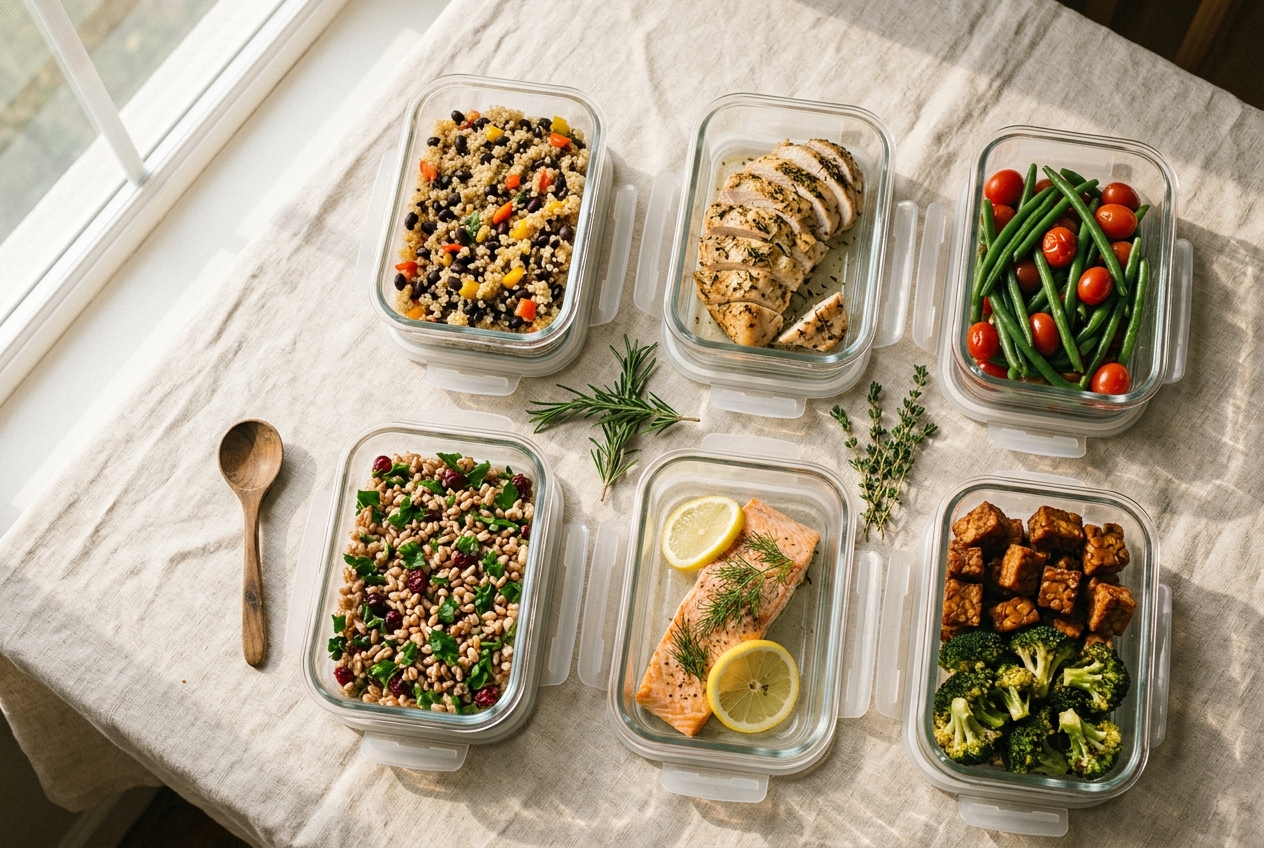
  • Component-based prep creates recombination options: one batch becomes three distinct meals with different finishers.

Choosing Your Planning Style

If you like variety, plan two dinners that intentionally produce leftovers and two dinners that are fast to assemble. If you prefer routine, rotate a small set of breakfasts and lunches, and let dinner be the only meal that changes.

A practical rhythm that works for many households is a short weekly reset plus a midweek mini-reset. Think in anchors rather than rigid rules: one protein you genuinely enjoy, one high-fiber carbohydrate, two vegetables (one fresh, one frozen is fine), and two sauces or seasonings that keep meals from tasting the same.

This is where balanced meal plan ideas become actionable. You're not chasing novelty; you're choosing a handful of building blocks that can recombine into different bowls, salads, wraps, and plates throughout the week.

Repeatability is your ally. A plan you'll follow beats a plan that looks impressive on paper but crumbles when work and training weeks get chaotic.

Eight-Step Planning Workflow

A simple framework that produces a full week of options in under two hours

Building Your Weekly System

Pick your prep window and protect it. Even 60–90 minutes can be enough if you focus on components. Choose a menu skeleton: two breakfasts, two lunches, and three to four dinners you can repeat or remix. Build in one convenience meal—a frozen entrée plus extra vegetables, or a rotisserie-style chicken plus salad kit—so the plan survives a hard day. Write a grocery list by category: produce, proteins, pantry, frozen, and dairy or alternatives. This reduces impulse buys and forgotten essentials. Prep the highest-friction items first: wash greens, chop onions and peppers, roast vegetables, cook grains. Cook one or two proteins in bulk or prep them raw in marinades so dinner becomes assembly. Portion grab-and-go options for the next one to three days, and freeze anything you won't eat within that window. Review and refine next week: note what ran out early, what you ignored, and what felt effortless. Difficulty is moderate not because techniques are hard, but because organization matters—the time savings show up later in the week.

Batch-cooked components ready for recombination: grains, roasted vegetables, and proteins portioned for the week ahead.

Essential Prep Steps

  1. Pick your prep window and protect it—even 60–90 minutes is enough if you focus on components.
  2. Choose a menu skeleton: two breakfasts, two lunches, and three to four dinners you can repeat or remix.
  3. Build in one convenience meal so the plan survives a hard day without collapsing entirely.
  4. Write a grocery list by category to reduce impulse buys and forgotten essentials.
  5. Prep the highest-friction items first: wash greens, chop vegetables, roast, cook grains.
  6. Cook one or two proteins in bulk or prep them raw in marinades so dinner becomes assembly.
  7. Portion grab-and-go options for the next one to three days and freeze anything beyond that window.
  8. Review and refine next week: note what ran out early, what you ignored, and what felt effortless.

Nutrition Guardrails

Building Balanced Plates

Plate Pattern

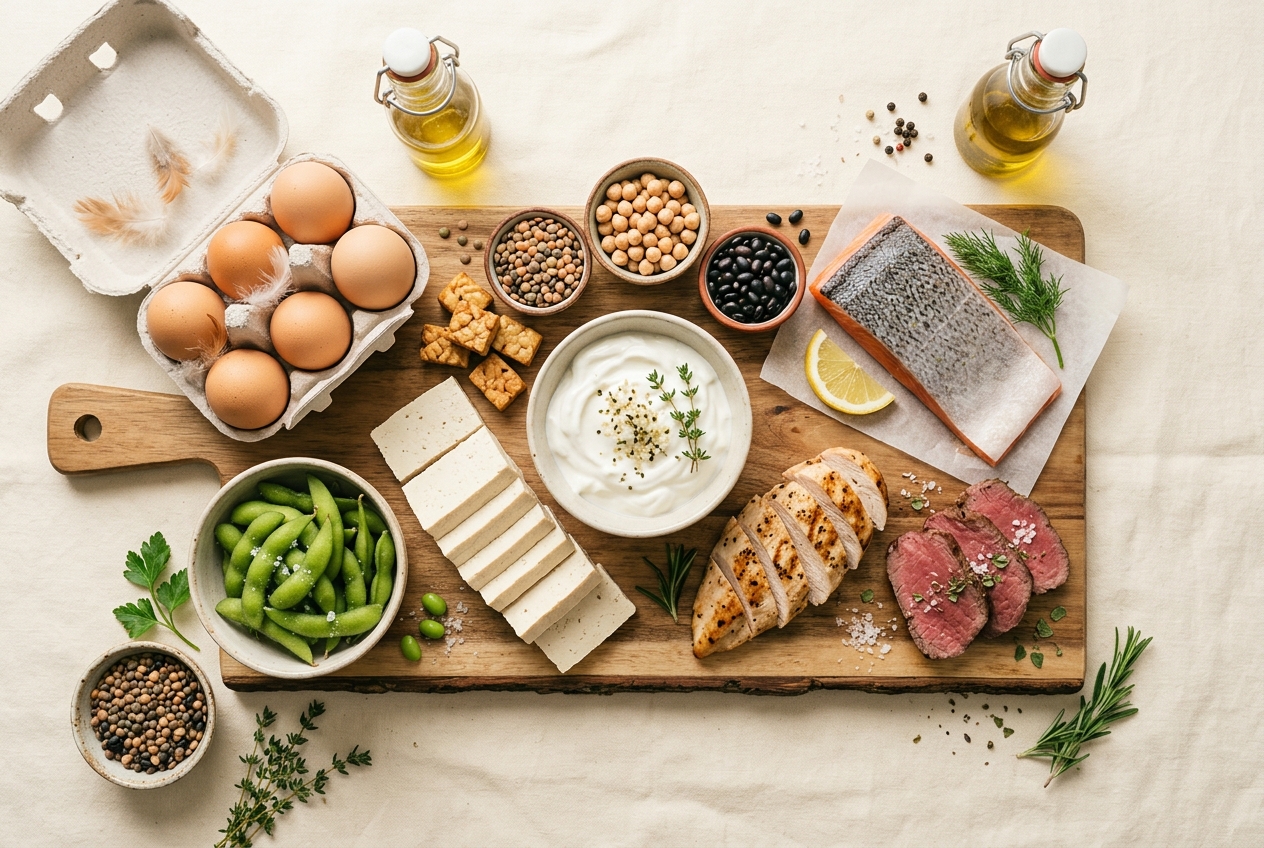
Aim to include a protein source, a high-fiber carbohydrate, and at least one colorful plant in most meals. Add fats for satisfaction and nutrient absorption: olive oil, avocado, nuts, tahini, or fatty fish. This pattern makes grocery shopping easier and ensures meals stay satisfying throughout the week without complex calculations.

Component Recombination

When you batch-cook components, keep flavors diverse by changing seasoning profiles rather than cooking entirely different meals. Roast a large tray of vegetables once, but finish portions differently: lemon and herbs for one meal, cumin and chili for another, and soy-ginger for a third. The same protein becomes three distinct experiences.

Food Safety Foundation

Refrigerate leftovers promptly—within two hours is a common rule of thumb. Use shallow containers so food cools faster, and label items with the date. USDA food safety guidance notes that leftovers can be kept in the refrigerator for three to four days. If you won't eat them in that window, freezing is a better plan. When reheating, heat thoroughly to 165°F.

Common Planning Mistakes

  • Overcommitting—planning seven perfect dinners when you realistically cook four
  • Prepping meals you don't actually like, then blaming willpower when you skip them
  • Under-fueling: packing salads and lean proteins but forgetting carbs and fats
  • Repeating the main niche keyword in every meal instead of varying your flavor angles
  • Ignoring constraint points—trying to cook elaborate dinners on your busiest days
  • Skipping convenience items and making prep feel like a weekend project instead of infrastructure

Special Diet Adaptations

A flexible system becomes even more valuable when you're accommodating special diets, because just grab something often isn't an option. The solution is to keep the structure the same while swapping the component.

For vegetarian or vegan patterns, emphasize legumes like lentils, chickpeas, and black beans, plus tofu or tempeh, edamame, and nuts and seeds for fats. Plan one high-protein batch item—like lentil bolognese or a tofu sheet-pan bake—that can turn into multiple meals throughout the week.

For gluten-free eating, anchor your carbs with rice, quinoa, potatoes, corn tortillas, and certified gluten-free oats. Keep sauces simple to avoid hidden sources. For dairy-free needs, build creaminess with tahini, avocado, olive oil, and blended beans or cashews, and choose fortified nondairy milks or yogurts if you use them.

For lower-sodium eating, the biggest lever is reducing packaged sauces and seasoning heavily with acids and aromatics: lemon, vinegar, garlic, ginger, citrus zest, fresh herbs, and spice blends without added salt. These swaps preserve flavor while meeting your dietary needs.

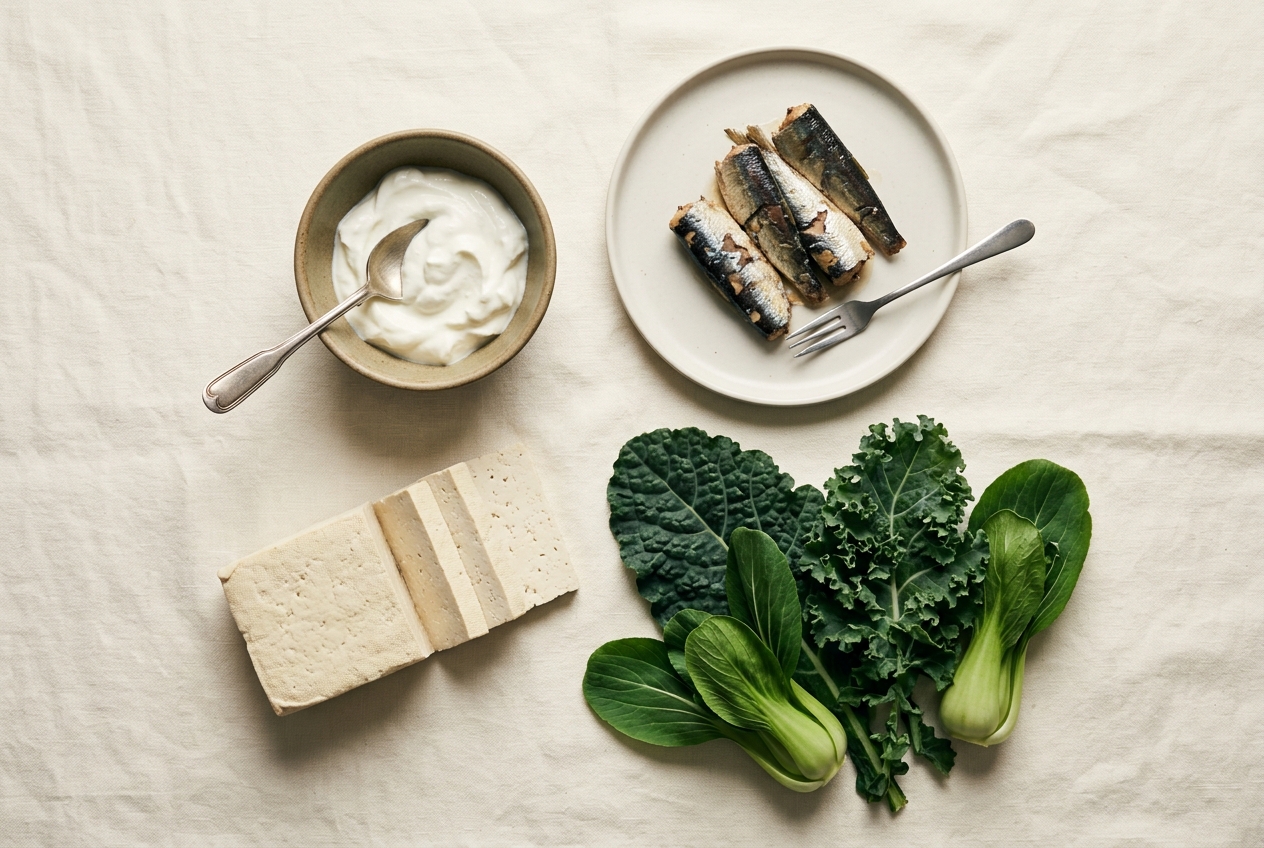
Omega-3s are a common point of confusion because the conversation jumps quickly from food to pills. Food first is still the most evidence-aligned approach for most people. The American Heart Association recommends eating two servings of fish, particularly fatty fish, per week.

If you don't eat fish, plant sources like chia seeds, flaxseed, walnuts, and canola oil contribute alpha-linolenic acid. The National Academies lists Adequate Intake levels for ALA at 1.6 g per day for adult men and 1.1 g per day for adult women.

Where do omega-3 supplements fit? They can be useful when a person consistently cannot meet seafood intake or prefers not to, but they're not automatic. Quality, dose, and tolerance vary. A conservative, safety-minded approach is to stay within widely cited federal guidance that adults should not exceed 3 g per day of combined EPA and DHA, with no more than 2 g per day from supplements.

People who take medications that affect blood clotting, are preparing for surgery, are pregnant, or have complex health histories should discuss supplement use with a qualified healthcare professional—because natural is not the same as risk-free.


mm

Dr. Sarah Mitchell

Nutrition Writer

A registered dietitian and nutrition scientist with over 12 years of clinical experience, Dr. Mitchell specializes in translating complex nutritional research into practical guidance for everyday wellness. She holds a PhD in Nutritional Biochemistry and serves as VitalityHub's senior editor for evidence-based health content.

Get new articles by email

No spam — only new material on this topic.

You can unsubscribe at any time.